What-Cha's Discover Korea 2013 Green Tea & Bonus Tea Flowers


So I decided to write a little on What-Cha’s Discover Korean Green tea 2013 sampler, even though I am glad I bought each tea individually. Before I get into my thoughts on these teas I have to say how astonished I am at how well this tea holds up very well for greens that are over a year old. I was surprised at how much better these Korean greens were compared to other Korean greens I tried this year. I have something of a sordid love affair with Korean teas, I enjoy the flavors often found in Korean teas, but they never seem worth the price What-Cha’s teas are the exception for me.


Korea Jukro Jungjak 2013 Sparrow's Tongue 'Jakseol' Green Tea
Origin: Jukro Tea Company, Hwagae Valley, Hadong, Korea
Harvest: Jungjak (Third flush)
Temperature: 160oF (increasing five degrees each subsequent infusion)
Brewing Time: One Minute (plus an additional minute for each subsequent infusion)
Aroma: Grassy, Floral and Cooked Spinach
Flavor: Corn, Grassy, Buttery and Ocean Air


Tasting Notes: You can tell it was made with love and handpicked, definitely the star of the three. This tastes like a yasaeng-cha (wild tea). It had a nice mouthfeel, it doesn’t feel that different from the other two teas, but there is certainly something there that I can’t quite put my finger on. It reminds me a little of a Japanese green, but it still is distinctly Korean. This is the most complex of the three and is definitely worth the price. At the time of writing this it was being sold at $20.80 for 50g and is easily worth that price. While it is the tea I have the least to say, it is my favorite of the three. It is deceptively simple, I wasn’t that impressed with my first infusion, but in my second I started to recognize the various flavors in this tea.


Korea Dong Cheon Sejak 2013 Sparrow's Tongue 'Jakseol' Green Tea
Origin: Dong Cheon, Hwagae Valley, Hadong, Korea
Harvest: Sejak (Second flush)
Temperature: 140oF (increasing five degrees each subsequent infusion)
Brewing Time: One Minute (plus an additional minute for each subsequent infusion)
Aroma: Roasted Corn, Grassy and slight wildflower
Flavor: Corn, Grassy, Lightly Roasted and Woodsy


Tasting Notes: This was the first of the three Korean greens I tried and I was kind of surprised that a Sejak is less expensive than a Jungjak. Although it is a very nice tea, the Jungjak was made with more care, but I digress. I liked this tea. It might be the one I would pick the most out of the three. I am not often a fan of roasted and woodsy teas, but I found that this had a very nice roast on it. I got eight infusions out of the leaves before it started to lose flavor. I drank until the thirteenth infusion though, it still had some left in the leaves, but it had become very thin by then. At the time of writing this is sold for $17.60 for 50g and is worth the price.


Korea Dong Cheon Daejak 2013 Sparrow's Tongue 'Jakseol' Green Tea
Origin: Dong Cheon, Hwagae Valley, Hadong, Korea
Harvest: Daejak (Fourth flush)
Temperature: 158oF (increasing five degrees each subsequent infusion)
Brewing Time: One Minute (plus an additional minute for each subsequent infusion)
Aroma: Corn and Grassy
Flavor: Corn and Grassy


Tasting Notes: While it is the simplest of the three, it stays very nice and stays relatively the same in subsequent infusions. I got thirteen infusions out of this and was quite satisfied with it before it started to lose flavor. I stopped at the fifteenth infusion, it might have had more to give, but I had stuff to do and I can’t spend the whole day drinking tea (much to my chagrin). I generally like trying more complex teas whose flavors wax and wane, but this was very nice daily drinker. This is the kind of tea that you’ll never feel an overwhelming urge for, but it is the type of tea that you can drink whenever. I am not saying to avoid this tea, but it is a very subtle tea that is not the type to dazzle you initially, but is the type that you find you really enjoy the more you drink. It sort of reminds me of the person we all know who you overlook and not realize how close you are to. At the time of writing this it cost $9.20 for 50g and it is definitely worth the price, for this very modest price it is a very introduction to Korean greens, it isn’t something that will amaze you, but it will certainly be comfortable to drink.

Whenever I do these posts with multiple teas I always struggle a bit, especially when talking about favorites. I almost want to say each tea is my favorite, but the Daejak is a good everyday type of tea, whereas the Sejak is the sort of tea I’d enjoy serving to others and the Jungjak is the kind of tea I’d like to hoard and never share. I loved all three of these, but the Jungjak and the Daejak stood out the most, the Sejak just didn’t shine as brilliantly as the other two. These are very similar teas and perhaps that is why I am having trouble with them whereas I had no trouble with comparing Beautiful Taiwan Teas Milk Oolong to What-Cha’s. I’ll admit I felt a little stressed when writing this, since these have very similar flavors. I am glad I didn’t drink these back to back or else I might have missed some of the nuances in these teas.


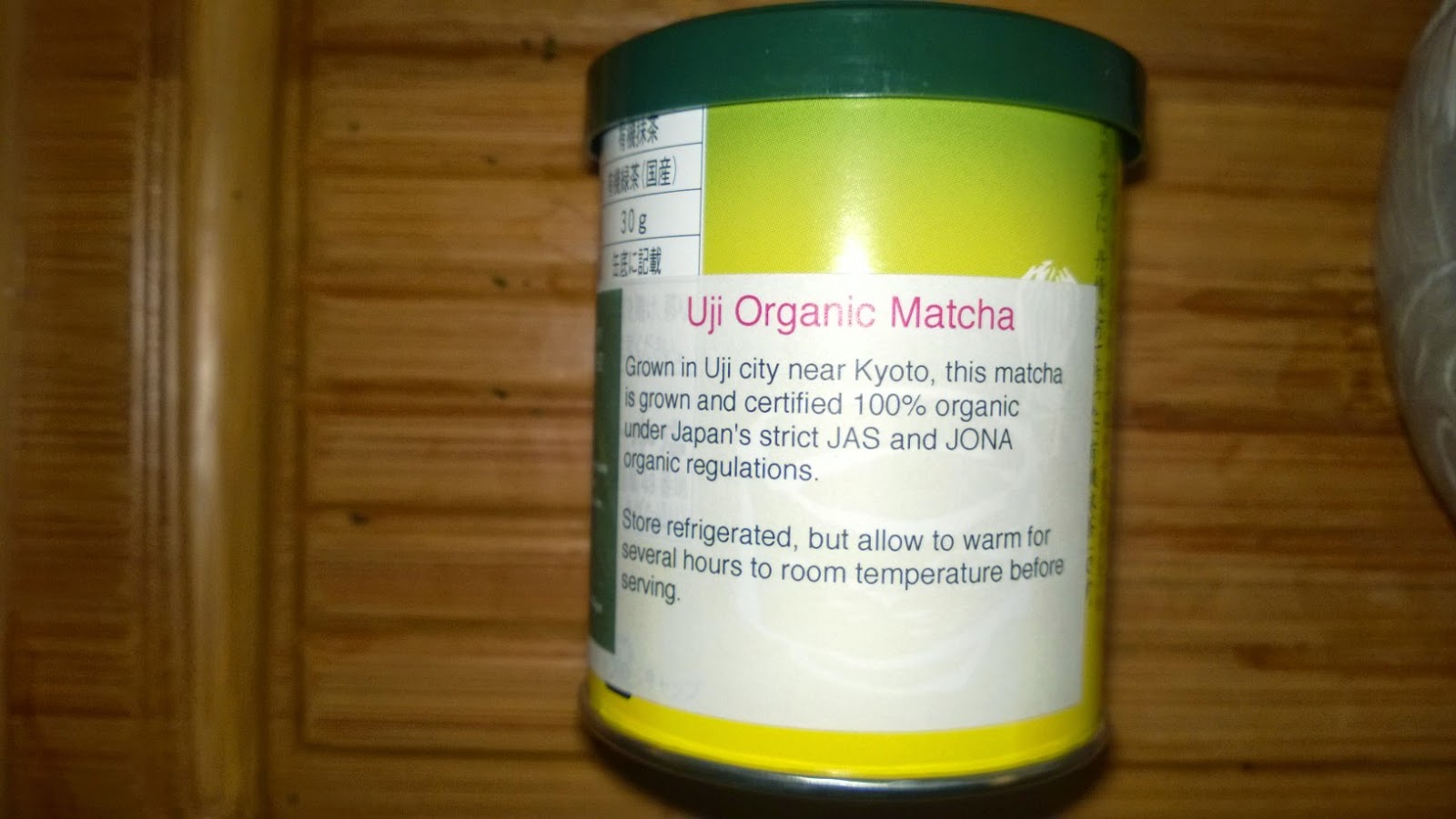
Midweek Matcha - O-Cha's Uji Organic Matcha


Today I tried  Uji OrganicMatcha from O-Cha. I did not expect much from this matcha because O-Cha sells two powdered senchas for roughly the same price, so I was surprised by how good it was. It’s a tiny bit bitter and less complex then higher quality matchas, but this is probably the best matcha I had at this price point. When brewed it makes a lovely deep green, I was surprised at how dark it became, but at the same time I was disappointed I couldn’t get it to foam that much. Next time I’ll have to make it with a different chawan.


White2Tea - 2006 Little Gold Melon & Old Bear

(Tea Provided for Review)
So I decided to compare the two puerhs from White2Tea to each other. I really liked one and the other was way too dark for me to enjoy although it had a lot of nice individual elements. 


Tea: 2006 Little Gold Melon Shu


Dry Leaves: It took me a while to break a chunk off this little tuocha; I started off trying to break a fourth of it off, but I ended up sawing it with my puerh knife. The tuocha didn’t have a strong smell, but it smelled a little smokey.

Temperature: Boiling (Subsequent infusions at 190oF)
Brewing Time: Fifteen seconds ( + five seconds for each subsequent infusion)
Aroma: Slightly Fishy
Flavor: Sweetly Smoky, Earth, Woodsy and Licorice
Tasting Notes: I started with two thirty second rinses, since the item listing recommends a long rinse. Immediately I knew this was way too dark for me, but I soldiered on. I was surprised by the licorice taste I could distinguish in later infusions, although this doesn’t have a lot of staying power, I got eight infusions out of it. I was kind of surprised by the aroma, while it wasn’t fishy enough to be off putting, there was a slight smell, although this might have been caused by the thin wrapper.


I probably wouldn't buy it again, I am not really fond of Shou Puerh, but I was surprised at how creamy it was. Maybe if I used half as much tea or brewed at a lower temperature I would consider buying this, but for $1.99 for a 20g mini tuocha, it isn’t a bad deal. I just happen to like teas on the greener side.


Tea: 2006 Old Bear Fangcha


Dry Leaves: I got a big ol' chunk that I am starting a religion around. 

Temperature: Boiling (Subsequent infusions at 190oF)
Brewing Time: Fifteen seconds ( + five seconds for each subsequent infusion)
Aroma: Smoky
Flavor: Smoky, Malty, Toast, Tobacco and Damp Earth
Tasting Notes: I loved it. It has a nice staying power, according to my notes I got twenty-three infusions out it before I stopped taking notes. This is a tea that you shouldn’t drink if you have things to do, it just has so much to give. I didn’t finish this tea I had stuff to do and frankly it just lasts way to long for me. I have a little left over I might experiment brewing with for longer times. The Smoky tastes starts to disappear after the fifth infusion, but besides that it stays pretty constant. I didn’t notice the taste starting to thin out, which is ridiculous, generally I like to see teas change in later infusions, but I doubt I’d be able to distinguish the sixth infusion from the twentieth.


Definitely worth buying! $18 for 100g is nothing. I haven’t tried the other teas that TwoDog sent me yet, but I have a feeling this might be the one to beat. The bar is set pretty high with this Old Bear, while my only criticism of it is you might get bored since the tea doesn’t get better the more you drink. I am curious if this tea will age well, I generally like young Sheng Puerh, but I wonder if this is type of puerh you want to buy and forget about or the kind you drink immediately.


Midweek Matcha! - Hankook Tea's Powdered Green Tea


Today I tried the last of my Powdered Green Tea from Hankook Tea. Once again I used milk in place of water, although it tastes surprisingly good when brewed with water. I received this tea free when Hankook Tea ran a promotion over the summer, I kinda regret not buying their Malcha (Korean version of Matcha) because of how good this is, and this is only a culinary grade tea! Regardless unlike many powdered green teas this did not clump as much. After whisking this tea is very refreshing, not too sweet, not too grassy. I'll definitely purchase this again.


Eco-Cha’s Tsui Yu Jade Oolong

(Tea Provided For Review)

So I am going to experiment a little and change up my format a little. I tried Eco-Cha’s Tsui Yu Jade oolong. So I am going to list the flavors/tastes in order from strongest to weakest.

Origin: NanTou, Taiwan
Harvest: Spring 2014
Elevation: 400M

Dry Leaves: The shape is interesting, they are rolled smaller than a normal oolong and a little flattened, almost like an oval with a flattish bottom and rounded top. They had a light floral aroma and a stronger rosemary scent.


First Steeping
Temperature: Boiling
Brewing Time: One Minute
Aroma: Mostly Vegetal, Fresh Sage
Flavor: Mostly Nutty, Green Beans, slight bitterness
Tasting Notes: I was surprised by the sage aroma; I have not encountered any Taiwanese oolongs, or any oolong for the matter, which have herb scents. I am rather fond of sage so I immediately knew I was going to like this tea.


Second Steeping
Temperature: 190oF
Brewing Time: Two Minutes
Aroma: Vegetal, Cooked Sage, Rosemary and Thyme
Flavor: Nutty, Spinach. Floral and Honey
Tasting Notes: I love how savory yet sweet this tea smells! This is very smooth and easy to drink. Right now it is a nice mix of savory and sweet, I like savory scents and flavors more so then sweet. This is very balanced so if you love savory teas and hate sweet ones (or vice-versa) you’ll probably not like this. I happen to like both and find this to be a perfect balance between the two.


Third Steeping
Temperature: 190oF
Brewing Time: Three Minutes
Aroma: Orchid and Honey
Flavor: Green Beans, Spinach, Nutty, Honey and Sage
Tasting Notes: I was sad to see the savory scents disappear, but the taste became more prominently savory at this point (although in later steepings, it wavered back in forth between sweet and savory). Although I could finely taste the sage I’ve smelled in the tea.


I liked this tea and it isn’t that expensive, only $7 for 38 grams. It had a nice mouthfeel, a little thicker than similar Taiwanese oolongs grown at 400 meters above sea level, but not as thick as a proper high mountain oolong. I’d definitely buy this tea when I run out, as I said before I have not encountered any oolong with a nice herbaceous aroma or taste and I am quite fond of this flavor/taste. While I adore floral oolongs, herbaceous teas are something of a rarity for me; I can often find herby tastes in Japanese greens. I was surprised at how long this tea lasted, for the price I was expecting it to last maybe six or seven steepings, but I got thirteen whooping steepings out of the leaves and while it started to lose its complexity around the tenth steeping and become distinctly nutty, it was interesting enough to continue on. This is a great value for the price. 

Midweek Matcha! - Teavivre’s Organic Green tea Powder


So I decided to continue Midweek Matcha, even though I have yet to sample a proper Matcha for this blog, with Teavivre’s Organic Green Tea Powder. When brewed with water, this green tea powder has rather nice seaweed taste, while not as complex as a Japanese Matcha it compares quite well to a similarly priced powdered Japanese Sencha. But where this powdered tea really shines is when it is prepared with milk, it becomes more sweet then bitter and has a nice rich grassy taste. I was surprised by the richness of it. Overall a very good powdered green tea. I’ve reordered this three times already and it is my everyday powdered green tea. The price is pretty good for the quality, if this was a Japanese powdered Sencha I think it would be selling for about twice the current price.