Eco-Cha's Jin Xuan (April 2014)

(Tea Provided For Review)


Today I decided to look at Eco-Cha’sJin Xuan (April 2014). I know I’ve been looking at a lot of oolongs, recently, but I decided to try this today rather than a green tea or even a nice puerh. The leaves aren’t particularly aromatic like some teas; in fact they are quite subtle. Sometimes I overlook the subtler teas that don’t instantly grab my attention so I decided to try this one.


Jin Xuan Oolong
Origin: Zhu Shan NanTou, Taiwan
Harvest: April 2014
Elevation: 400M


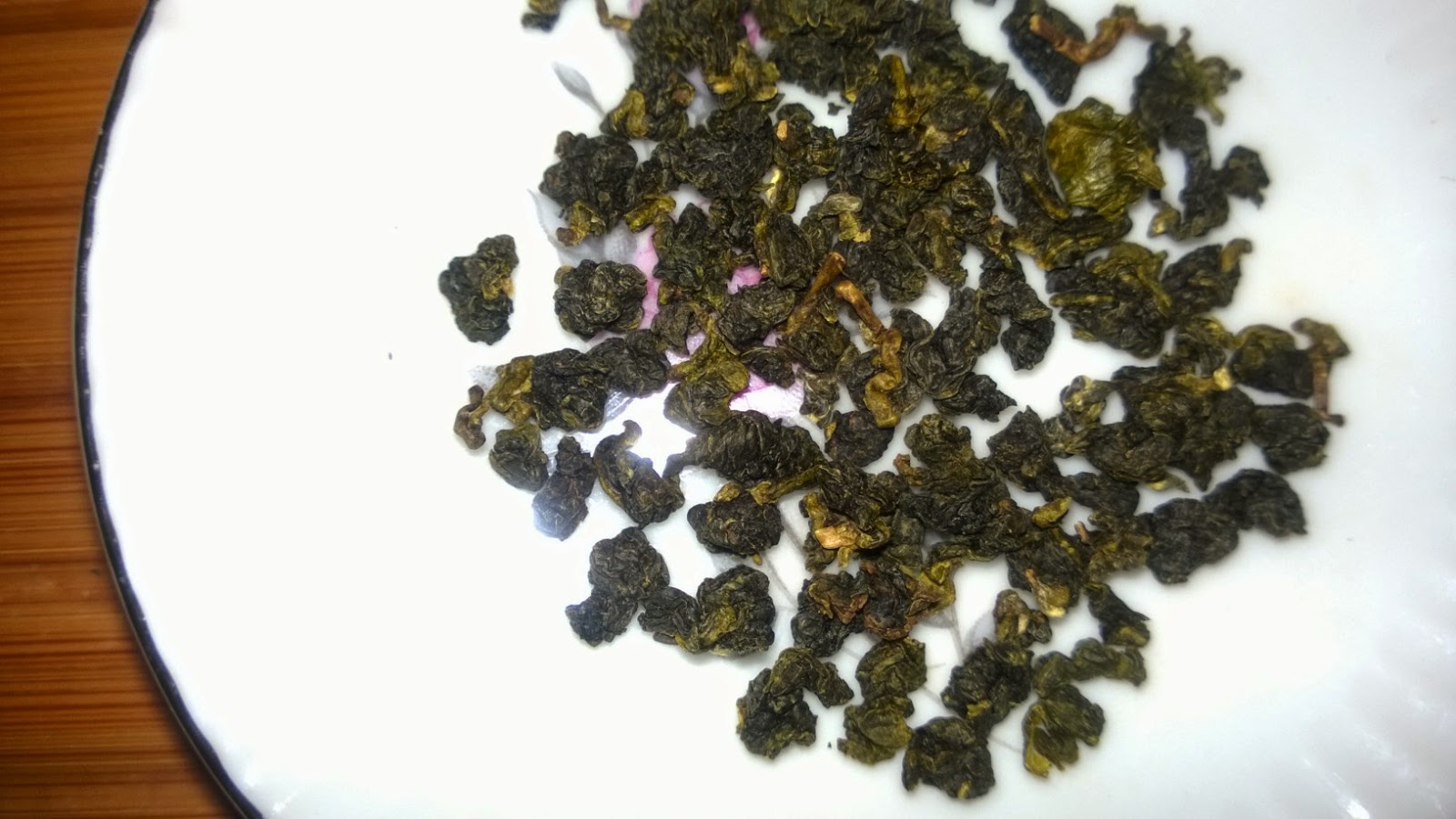
Dry Leaves: There is a very intense floral aroma to the dry leaves and a little bit vegetal. And the dry leaves have a very interesting shape, sort of like tightly twisted crossed with pearls, there is some uniformity to the tea leaves, but you can see a lot of uniquely shaped pearls as well. At first I thought the dry leaves were kind of ugly, since I really like uniformity in tea leaves, although after I studied the leaves for a bit, they started to grow on me. Some of them have a rosebud-esque look and you can see a lighter green one that looks a little like popcorn.


First Steeping
Temperature: Boiling
Brewing Time: One Minute
Aroma: Fruity, Floral and Green bean
Flavor: Bamboo leaves, Woody and Creamy
Tasting Notes: There was not a strong milk taste so far and it had a slightly thin mouthfeel for a Taiwanese oolong, although the milk taste did linger. This steeping was very subtle, I was correct I my suspicion that I’d taste many of these flavors in subsequent steepings.


Second Steeping
Temperature: 190oF
Brewing Time: Two Minute
Aroma: Peach, Milk, Floral, and Green Beans
Flavor: Milk, Bamboo Shoots, Malty and Sugarcane.
Tasting Notes: It became very milky this steeping, and had a thicker mouthfeel this time although not particularly thick for a Jin Xuan. I was surprised to find that this Jin Xuan had malty notes in it, I haven’t had many lighter oolongs that come close to anything resembling malty. It was quite pleasant, this is probably my favorite steeping, I like the progression from Bamboo leaves in the previous steeping to bamboo shoots; it had a lovely green tea feel to it, most of the unflavored Jin Xuans I had this year leaned more towards the floral oolong side rather than vegetal green and I quite enjoyed it


Third Steeping
Temperature: 195oF
Brewing Time: Three Minute
Aroma: Mild Peach and Floral
Flavor: Creamy, Woody, Bamboo Shoots and Honey
Tasting Notes: It became considerably less sweet this time, although I could still taste some sweetness in it. Considerably milkier then the last infusion; I liked the return of the wood taste and it meshed really well with the Milk taste. The bamboo shoot taste was lighter than the previous infusion and it felt less like a green oolong, more like a lightly roasted one. With the exception of the bamboo shoots, this tea lost it vegetal edge.


Overall very nice Jin Xuan, most of the Milk Oolongs I’ve tried tended to be more floral so I was surprised at the vegetal elements in this tea. I forgot to take a picture of the used leaves, but you can definitely tell they were machine harvested (although Eco-Cha has that listed on their website, I always appreciate a store that is honest when they could have not listed that) there was some slight tearing on the leaves, but they were in fairly good shape for being machine harvested. For 38 grams at $8, this is definitely worth the price, this is a nice everyday tea, not as milky as other Jin Xuans, but not as floral. So if you want a Jin Xuan with a light milk taste and a mild floral aroma, this is the tea for you.


Tea Ave Preview


(Tea provided for review along with a tasting cup, an aroma cup and a $15 gift card to Tea Ave’s store when it opens)

I was lucky enough to receive three samples of Tea Ave’s stock. I first heard about Tea Ave from Reddit and it looks like they are finally going to launch their store soon. I decided to review all three samples in one post rather than three like I originally was planning to do. I decided to not space my reviews out like I normally do when I receive teas to review since there are a couple of teas from Tea Ave I’d like to look at after they launch their site.


Tie Kwan Yin Oolong
Origin: Muzha District, Taipei City, Taiwan
Cultivar: Tie Kwan Yin
Elevation: 350-400m

Dry Leaves: I love how much info Tea Ave has on their teas on each individual sample package. Although it might be a little overwhelming to someone new to tea, I was rather interested in what they decided to list. The origin and elevation is pretty standard for Taiwanese oolong. The roasting level, oxidation level and cultivar are pretty rare and I love that they included it; and then three separate brewing recommendations (tea bag, tea pot and cold brewing), although the tea bag recommendation wasn’t really necessary. Unfortunately I lost all my photos of this particular tea, but the leaves were closer to a green oolong then a darker one.   

First Steeping
Temperature: 195oF
Brewing Time: Three Minutes
Aroma: Roasted and Fruity
Flavor: Roast, Fruity and Burnt Wood
Tasting Notes:
This was my least favorite of the three (not surprising). I am not really fond of roasted oolongs; I have trouble distinguishing darker oolongs apart. Most roasted TKY taste nearly the same to me. So I wasn’t surprised to taste mostly the roast and some fruity notes, but I was startled to be able to taste burnt wood. The burnt wood flavor was the best part of this tea for me; it distinguished it enough from others that made it stand out for me. As to would I buy this tea, maybe. I generally prefer aged tea over new roasted teas, but if the price is right I may buy this once Tea Ave launches their site.

Lishan Oolong
Origin: Lishan Mountain Region, Taichung City, Taiwan
Cultivar: Qinxin Oolong
Elevation: 1700m


Dry Leaves: The leaves were the most underwhelming of the three; this had a light floral scent. The leaves had a lot of yellow and green and not a lot of blues.


First Steeping
Temperature: Boiling
Brewing Time: Three Minutes
Aroma: Floral and Fruity
Flavor: Floral and Sugarcane
Tasting Notes: This has a nice thin-ish mouthfeel, not as thick as teas grown at higher elevations, but not what I normally expect for teas grown at 1700m. Regardless it was nice. It is a little vanilla for my taste. I could taste honeysuckle, hyacinth and lilies, other than that I could taste sugarcane. It was very mellow. I imagine it would brew a lot better for longer times.


Depending on the price I might buy this again. I tend to prefer more complex oolongs.

Cape Jasmine Oolong
Origin: Alishan Mountain Region, Nantou, Taiwan
Cultivar: Jin Xuan
Elevation: 1200m


Dry Leaves: The leaves were the most striking of the three samples, mostly green, but with a fair bit of yellow and blues running through it. Otherwise it has a strong Gardenia aroma as well as some minor floral ones more towards orchid than anything else, but it was a little murky.


First Steeping
Temperature: Boiling
Brewing Time: Two Minutes
Aroma: Gardenia and Floral
Flavor: Gardenia, Jasmine and Milk
Tasting Notes: This was my favorite of the three samples I received. Initially I wasn’t getting much besides jasmine, but after a few seconds I began to distinguish the gardenia notes. I wonder if this is scented with gardenia blossoms. The gardenia is very powerful and intoxicating. I didn’t notice the milk taste till I tried this for the second time, although if I read the entirety of the sample I would have known this has a Jin Xuan base. I don’t think this had a very strong Jin Xuan, it’s not that creamy and the milk notes are the weakest, but if this was scented with gardenias it would not be surprising if it overpowered some of the base tea’s characteristics. It was a little buttery, not too much though. I tend to find Taiwanese teas grown below 1000m or those grown above 2000m (especially winter harvests) tend to be rather buttery, but everything inbetween in my experience has thinner mouthfeels.


Overall I preferred the Cape Jasmine over anything else and the tea I’d most likely purchase again. I am a little on the fence about the Lishan, but I’m willing to give it another chance. Besides that I loved the amount of detail on Tea Ave’s packaging, I know a lot of tea companies tend to favor simpler packaging, but they often lack information like origin or recommended brewing times. I am looking forward to trying more of Tea Ave’s teas once they launched. The only thing I thought was really missing from Tea Ave’s packaging is the harvest date, but the teas tasted quite fresh. Hopefully next time I try one of Tea Ave’s teas my camera won’t delete the majority of my pictures.  

What-Cha’s Huangshan Yellow Sun Yellow Tea 2014

Origin: Huangshan County, Anhui Province, China

I originally thought this was a tea from Zhejiang, in fact my sample was mislabeled, Alistair of What-Cha was kind enough to send me a sample of this before he posted the tea to his site, so when I was drinking this I thought it was a tea from Zhejiang and it is interesting that it is similar to What-Cha’s Wild Growing Long Jing. In my initial notes I listed this as the dark sister to the Long Jing because while it has some minor similarities to it, it feels very different. They both have an interesting chocolate-y aspect to them, but the Long Jing falls on the green side of the spectrum and this Yellow Sun is on the darker/roasted side.

While I am a little disappointed that this isn’t from the same place as the Long Jing, I was not disappointed, but I am a little curious if the initial confusion didn’t color me. Which brings up greater questions like would I feel the same way about this tea if I tried it again (pretty much yes, I cut some of my notes out), how would I describe this tea if I tasted this blind, among many others. While the misinformation did cause me to be a little more retrospective about drinking tea, I am not going to go that in depth in that, but I feel I should describe my normal tea drinking process before I go on. Generally when I am sampling a tea I prefer larger samples (10g) since I use half to prepare the tea take some brief notes and then use the remainder the next day and try again with a clean palate (without looking at my notes). I do this to cut down on some of the more out there flavors/aromas I may have experienced, generally if I taste something strange on day one that I didn’t on day two (or vice-versa) I write it off. While I do occasionally make exceptions like with the Premium Non-Black Russian Sampler I had last year, I try to have as firm opinion as possible.

Although this brings up an interesting question, how long (or how much) should I drink a tea before I feel comfortable to write about it? An Ounce? A week? I wish I had an answer for this, but unfortunately I don’t. I’ve been drinking a lot of What-Cha’s 2013 Korean harvests lately, in fact I’ve been drinking them nearly every night before bed and I am starting to be able to distinguish incredible degrees of nuance that I didn’t in my review. I feel that I am finally starting to know this tea. Sadly because of the nature of this blog and how I buy tea I can’t amend the format of my blog without drastically reducing the amount of content I produce. I don’t imagine it would be that interesting if I posted a week’s worth of tasting notes on the same tea. Regardless I never intended for this blog to describe the definitive experience of drinking x tea, this experience has certainly made me more aware of my blind spots and acknowledge my own biases. While I never felt comfortable with the idea that this is a tea review blog, I feel equally uncomfortable with calling this a tea critique blog, this blog is something different. I Maybe a record of my early impressions…

Dry Leaves: The leaves are very dark, I’ve had quite a few yellow teas, but I hardly consider myself an expert. Some of the leaves have quite an interesting shape, towards the bottom right you’ll see a brownish green tea leaf that is shaped almost like a scythe while others are slightly twisted. They have quite an interesting scent, a little malty and chocolaty, but there is some vegetal undertones that oddly enough does not clash with the Chocolate scent.


First Steeping
Temperature: 176oF
Brewing Time: One Minute
Aroma: Chocolate and Malty
Flavor: Chocolate, Roasted Hazlenut, Vegetal, Malty and Vanilla
Tasting Notes: This was rather surprising, I did not expect Chocolate and Vanilla to work so well with Vegetal. Regardless it was quite nice, a little reminiscent of an aged green oolong. The liquor was rather light for how much flavor it has.


Second Steeping
Temperature: 181oF
Brewing Time: Two Minutes
Aroma: Malty                     
Flavor: Roasted Hazlenut, Unami, Malty and Chocolate.
Tasting Notes: The chocolate went from the dominant taste to the weakest, I was a little sad to see the vanilla disappear, I don’t often taste vanilla in an unflavored tea and it worked very well with each of the individual flavors. While the last infusion wasn’t exactly a sweet tea, the vanilla was a nice contrast to the chocolate and roasted vegetable flavors. Regardless there was an unami aspect to this infusion that I didn’t pick up last time, it was a little out of place.

This was my favorite infusion, while it was unfortunate that the vanilla was missing, I feel it is so much stronger without it. It was like a dessert without even a hint of sweetness.It was interesting that both times I tried this tea that it has vegetal notes in the initial infusion that wasn't present in the later. 


Third Steeping
Temperature: 186oF
Brewing Time: Three Minutes
Aroma: Malty
Flavor: Roasted Hazlenut, Unami and Malty
Tasting Notes: It is starting to become more of the same, while it lost the chocolate notes that were present up until now it is becoming more typical of a roasted oolong, while it isn’t exactly one note it is starting to become simpler from here on.

This was a rather interesting tea, I went in expecting a tea similar to the star of What-Cha’s store (the Long Jing), but I had a very different tea. Different in a good way. While it isn’t as spectacular as the Wild-growing Long Jing, it is quite nice. And for 50g at $9 (at the time of writing this) it is a good deal unquestionably a tea to check out. I feel that I have to mention this, when I thought it was a tea from Zhejiang I thought it was a rather nice tea (I thought it was a nice contrast to the Long Jing) and now that I know it isn’t  I still think it is a nice tea.


Teatulia White Teabags 2014

(Tea Provided for review)
Origin: Bangladesh


So I received more tea to look at from a company I originally heard of on reddit and is interesting. Teatulia is a company that grows their own tea in their own tea garden. I first heard about Teautila interestingly an a subreddit unrelated to tea, I remember reading about their efforts to engage with their local community, most notably paying a living wage while being environmentally conscious. You can read more about Teatulia here, their efforts to further education and literacy was interesting. I hope to see more companies following Teatulia and others like Eco-Cha & Tealet efforts to better the living conditions of the people who grow tea.


Teabag: This is a first for me, a bagged tea on my blog, I was a little cautious at first since Teatulia also sells loose leaf versions of their teas. Teaulia has rather pretty packaging, and according to it their teabags contain whole tea leaves which seems to be true although there was some tea dust in the bags. Regardless the dry leave has a nice basil and wildflower scent and looks a little like a silver needle. I decided to try brewing this two ways, the first in the tea bag and the second loose leaf (I most note I only received teabag samples so I cut a tiny incision in the teabag rather than use their loose leaf. I can’t really comment on the quality of their loose leaf tea in this post).

Brewing in a Teabag
Temperature: 165oF
Brewing Time: Two Minutes
Aroma: Fresh Hay and Fruity
Flavor: Floral, Vegetal, Sage and Honey
Tasting Notes: This was rather dark for what appears to be a silver needle. It had a rather nice balance between Floral and Vegetal although the Sage made this rather unique, it is a little reminiscent of the herbaceous Taiwanese oolongs; in fact this feels much to dark for a white tea. I decided against following Teatulia’s suggested brewing parameters. I can’t imagine how this would have turned out if I used boiling water. Regardless this was quite nice, it feels to powerful to be a white tea, but I don’t think it would fit in with Greens or Oolongs.


It has been quite some time since I drank bagged tea, but I don’t remember teabags being this good. I was rather surprised, I’ll be honest when I opened my package containing the Teatulia samples I was a little disappointed to have received teabags rather than loose leaf tea. But after trying this I’ll honestly admit I was a little prejudiced against teabags and this is rather nice. The question is do I prefer this tea brewing bagless or if it makes no difference?


Loose Leaf
Temperature: 165oF
Brewing Time:
Aroma: Fresh Hay and Fruity
Flavor: Floral, Vegetal, Sage and Honey
Tasting Notes: Everything from taste to aroma is pretty much the same, although it the liquor was a little lighter (which was surprising) and a little tea particles escaped my strainer (not so surprising); otherwise this is nearly identical to being brewed in a teabag, perhaps a little stronger. As to whether or not I prefer brewing this in a tea bag or loose, I think I prefer the teabag, the differences were minor and this appears to be a very high quality teabag.


I was surprised at how much I enjoyed this tea, I am not really a bag white tea drinker and definitely not a fan of teabags, but this was quite nice. I am not sure I’d ever seek out bagged tea since most teabags contain tea dust and taste awful this was rather pleasant. And for $9.99 for 16 teabags this is definitely worth checking out even if you don’t like white tea. I’d wholeheartedly recommend this to any loose leaf tea drinker. While the overwhelming majority of bagged tea may be of poor quality this is evidence bagged tea can be better. While this is rather nice I am not exactly sold on teabags, I am curious to try Teatulia’s loose leaf tea in the future and compare it to their bagged tea I can’t help, but think it would be better.


Midweek Milky Matcha - O-Cha Organic Matcha Revisited


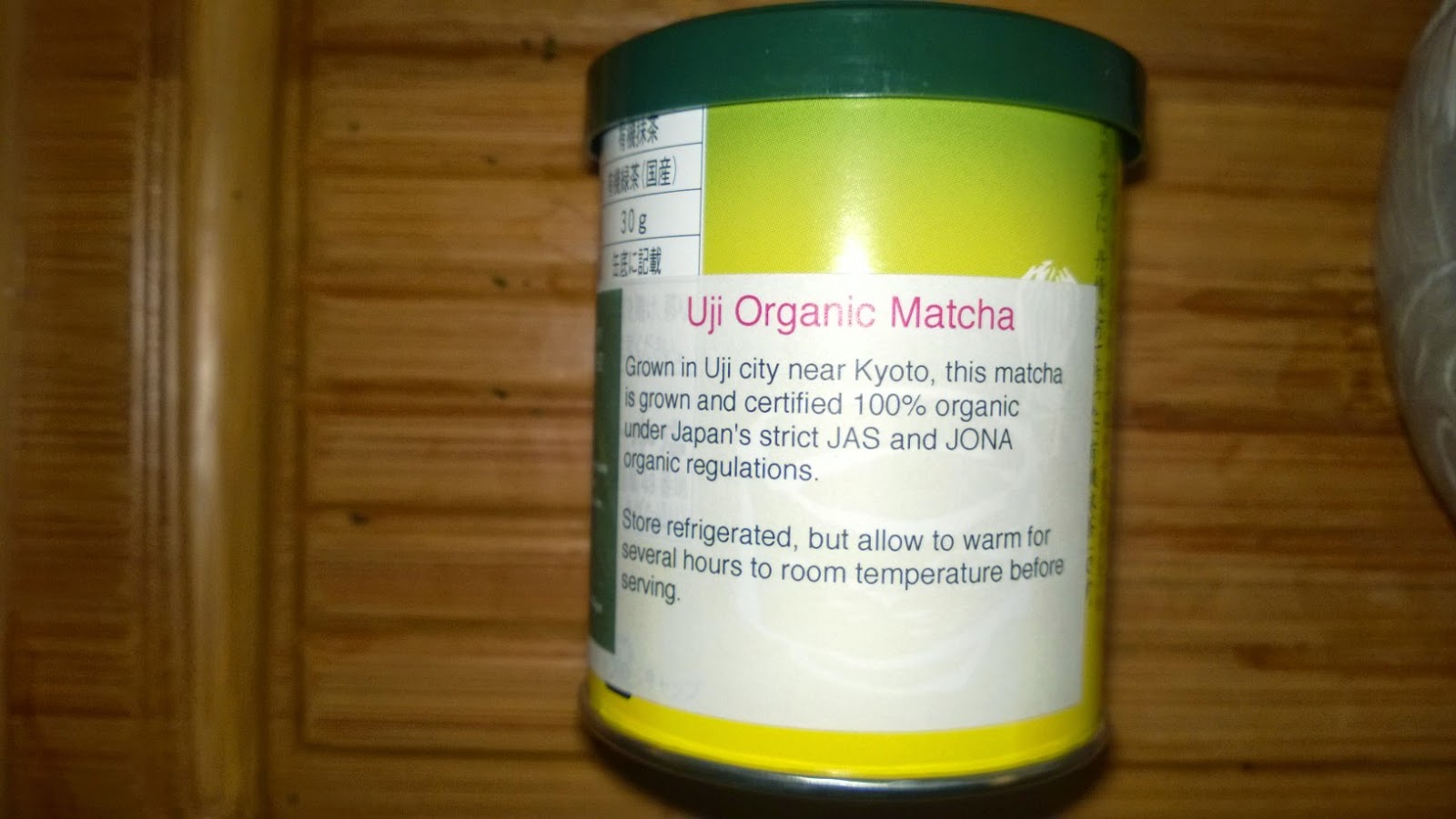
So I decided to revisit O-Cha's Uji Organic Matcha, last time I said I would try it again with a different chawan, unfortunately I forgot to and I don't have enough matcha leftover to try again, although I did manage to whisk a little foam this time. Regardless this time I decided to try again, but using milk instead. I think i prefer brewing it with water rather then milk, this time it has a nice sweet grassy taste, but that's it. This matcha is better brewed with water then milk.