Yunnan Sourcing 2010 Hand Braided Wild Arbor Sheng of Yong De

Origin: Yong De
Harvest: Fall 2010

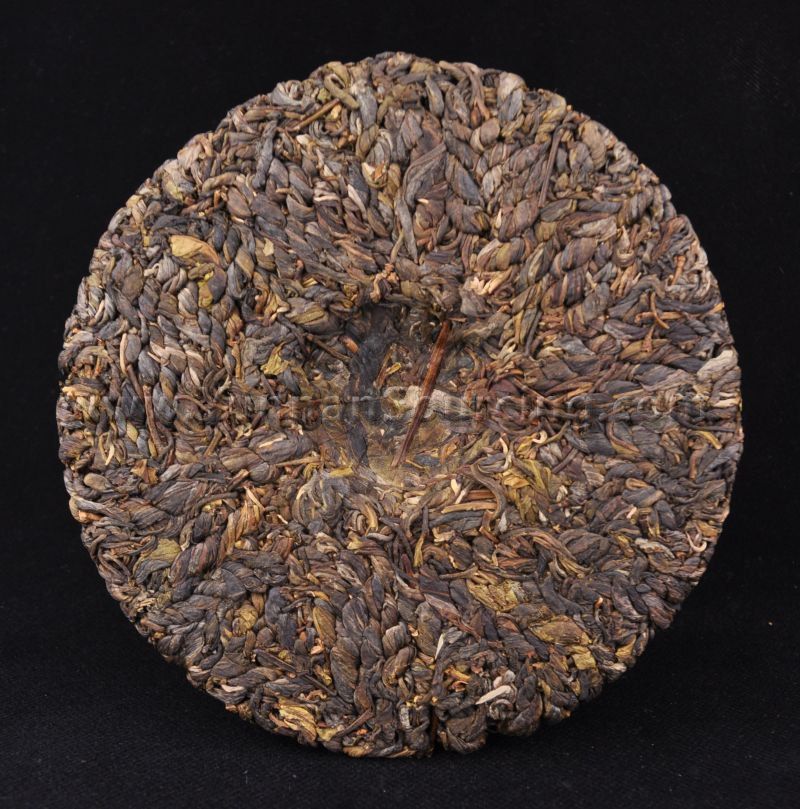
So I’ve been lusting after this tea for a while, I know we aren’t supposed to judge a tea by its aesthetics, but damn this is one sexy tea. Probably the sexiest tea I ever seen; I feel bad even sharing my photographs of this it is that beautiful (okay I always feel bad when sharing my images, but that is beside the point). I’m not sure if I ever described a tea as sexy, but this is absolutely gorgeous. I’m going to include some of Yunnan Sourcing’s images for the sake of conveying how beautiful this tea (I might include more of vendor’s images in the future posts, but I am not sure yet).
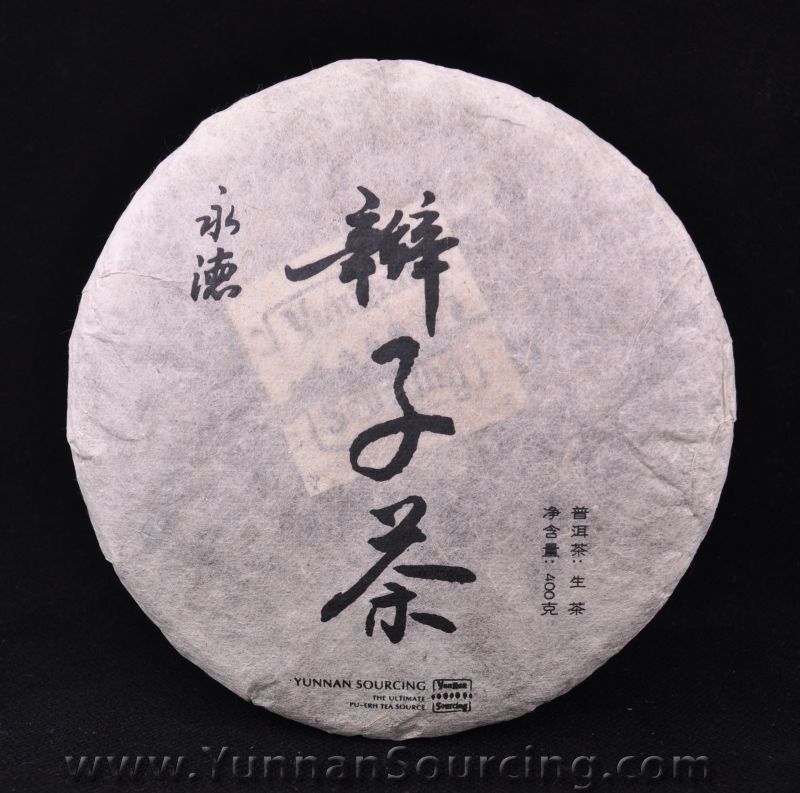


Fairly inconspicuous wrapper, slightly transparent, you can’t really see the goods its hiding. Look at that nei fei peaking out that wrapper, that tease! I wonder if Yunnan Sourcing chose a lighter wrapper just to show off this tea. It is definitely something to be proud of.
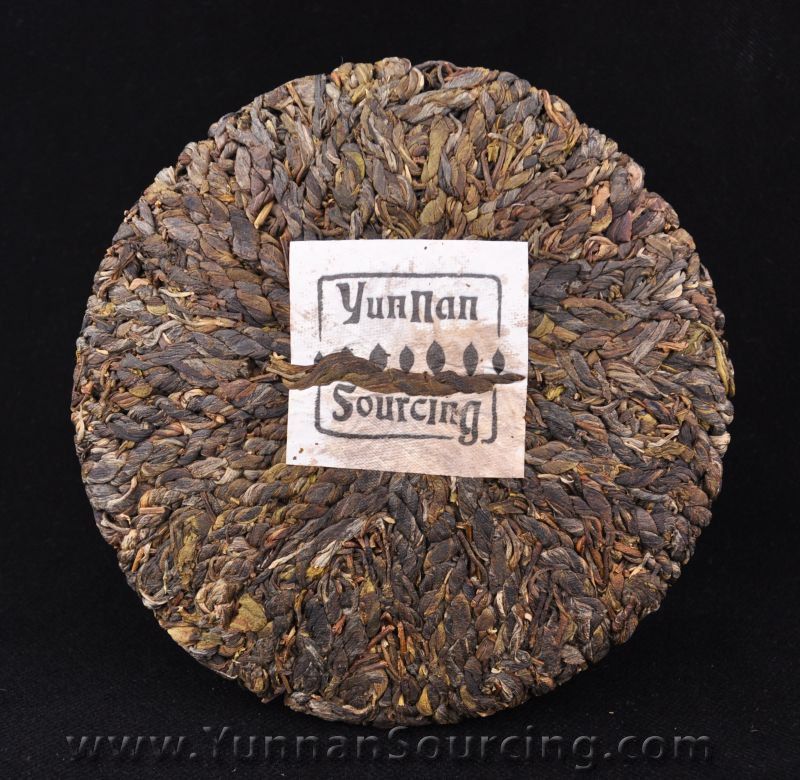

Wow! Look at that body! I can’t imagine the work that went into this cake. I am curious to know how long it took to braid each individual braid, but even without knowing how much work went into this tea I’m in love.
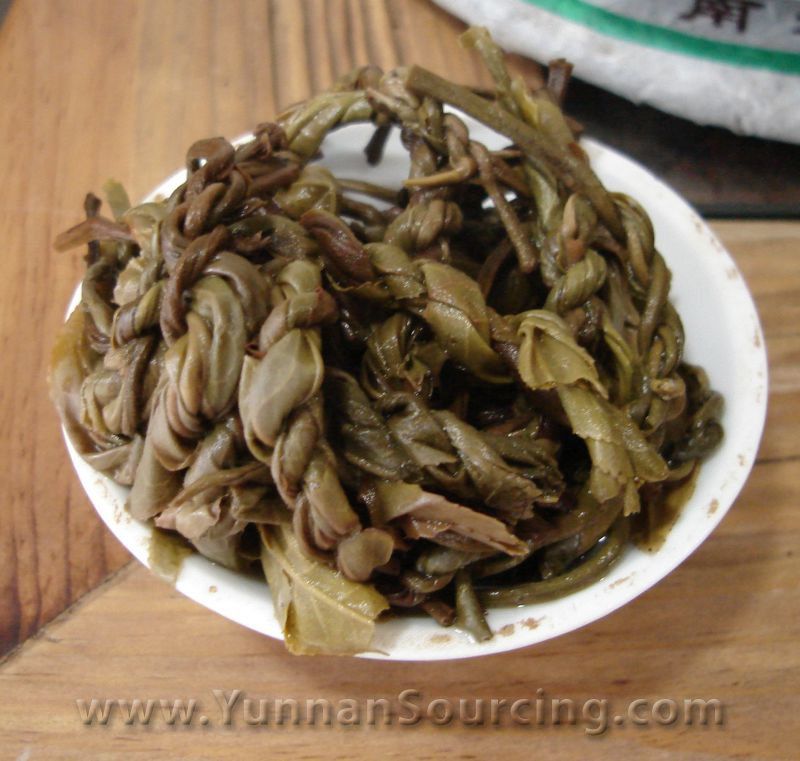
It takes a couple infusions before the leaves start to become distinct. You definitely need to use a pick to break apart this tea. Sadly I only have a knife so I did break up some of the leaves; I must remember to be a pick in my next order from Yunnan Sourcing.

(From here on out, all images are my own) Okay that’s enough strange sexualizing the cake talk, onto the description:
Produced exclusively for Yunnan Sourcing by a small tea factory in Yongde. We selected Fall 2010 material from wild arbor trees and then with extreme care ask local Yong De people to meticulously braid the tea. After being sun-dried, the tea is arranged carefully and then stone-pressed. Just like a good wild arbor Pu-erh this tea has incredible clarity and is very infusable. A balanced mouthfeel and clean!
Like many of Yunnan Sourcing’s descriptions this is somewhat lacking. I am normally not one for flowery language in my tea descriptions, but if there ever was a tea deserving the labor of the finest tippy golden flowery Indian wordsmith, this is that tea! I was amused to find that so far no one on Yunnan Sourcing has review this tea (at the time of writing this).
  
Dry Leaves: This is a very tightly compressed tea, as I mentioned before I used a puerh knife that was far to blunt to break apart my sample without damaging it. I was a little disappointed with my sample, you couldn’t really tell this is a braided tea till you got up close, I suspect my sample came from the middle or insides of a cake, but I’m not going to hold my disappointment against the tea.


First Steeping
Temperature: 175oF
Brewing Time: One Minute
Aroma: Fruity and Camphor
Flavor: Stonefruit and Honey
Tasting Notes: I originally stopped brewing at thirty seconds, but the tea and liquor was very light so I decided to add an additional thirty seconds.There is a little bitterness, unfortunately it is not enough that I enjoy it, but more than enough to overpower the stonefruit notes. There is a bit of an aftertaste, but I cannot identify it yet. Despite the bitterness there is quite a bit of sweetness so far, but the bitterness lingers in the back of my throat.


It feels like a very young immature tea, I generally go for the young cakes that are drinkable immediately and probably don’t have much of a future. I know Yong De is within the Lincang prefecture, an area where teas are often said to be green and bitter in their youth and are slow to age. I’d be lying if I was not shocked by this tea, by no means is this a bad tea, it feels very immature so far.


Second Steeping
Temperature: 180 oF
Brewing Time: Two Minutes
Aroma: Fruity             
Flavor: Stonefruit, Honey and Star Anise
Tasting Notes: The camphor aroma disappeared entirely. This still is a very light tea even though I used a lot of leaves and did three longish (ten second) rinses with boiling water and it still feels like it has been awaken yet. Regardless the bitterness is still the star of the show. While it isn’t quite what I would describe as kuwei (pleasant bitterness), but it is starting to not overwhelm the other flavors, the bitterness does not linger as long as the previous infusion; even though the stonefruit and honey tastes have pretty much the same intensity of the last infusion they aren’t being masked by the bitterness as much as last.


There was a rather interesting new flavor, at first I wanted to describe it as licorice, but I feel a little more comfortable describing it as star anise. I’m not sure if it was present in the previous infusion, it could possibly explain the bitterness, but I’m not possible.


Third Steeping
Temperature: 190 oF
Brewing Time: Three Minutes
Aroma: Fruity and Cane Sugar
Flavor: Stonefruit, Honey, Vegetal, Plum and Star Anise
Tasting Notes: It seems the bitterness becomes very apparent with longer brews rather than using hotter water (I used the remainder of my sample and upped the starting temperature fifteen degrees and halved the steeping time and the bitterness was much lighter). My major issue with this tea is the first two infusions are very light. I used a lot of tea about twelve grams and did three ten seconds rinses using boiling water and the first two infusions were still very light. Perhaps I should do longer rinses maybe somewhere between ten and thirty seconds. Regardless this is a swift punch to the kidneys compared to the previous two. It’s not that this is unpleasant, but I tend to prefer relatively similar infusions, if I had to assign a numerical value to each of the infusions so far (on a scale from one being the water and ten being a grain spirit) the first two would be two (relatively light, a little watery) and this is a definite six (somewhere close to whisky).


The tea is starting to become much more pleasant, it hasn’t that kuwei yet, but in later infusions it certainly does. Some of the sharpness and immaturity starts to disappear in later infusions. If I were to hazard a guess this is probably closer to a balanced (or at least near balanced) young sheng, perhaps too young to drink right now, but it isn’t undrinkable in its present state. My major issue with this tea is the later infusions start to become really interesting, but I’m not sure if I would want to skip so many of the early ones to get to them. Perhaps the heart of the issue is me; I love those young shengs that are drinkable right now that probably do not have much of a future, that green bean taste which can be a red flag. So far I have not bought a cake with the intention to age; I just don’t have the patience and I’d probably chip off a nice chunk every so often to see if it has gotten any better.


Despite the early overwhelming bitterness, this is a very smooth and clean tea, if you can get past its early blemishes this is quite a nice tea. Around the seventh infusion it starts to become very interesting, but for me it is too young to drink now. While I am nowhere near experienced enough to make an educated guess on how this will age or when it will be best to drink I feel fairly confident saying it is at a stage where it is not at its best. Despite my misgivings about this cake, I do intend to buy a whole cake, the very first cake I intend to buy to age (I don’t know if I will be successful, my curiosity may get the best of me and I may break into it early) rather than to drink now. Worst case scenario it is a very beautiful tea that I can always display somewhere. I’m not sure if I have ever seen a cake that was this beautiful before. Now onto the price and whether or not I’d recommend it. Like most Yunan Sourcing teas the sample is very reasonably priced, for $3.75 for 25g or a 400g cake for $32 (at the time of writing this) I feel it is definitely worth checking out.


Yunnan Sourcing 2015 Spring Moonlight Pavilion Pure Bud Bi Lo Chun White Tea

Origin: Zhenyuan Township (Simao)
Harvest: Spring 2015


Yunnan Sourcing was the first non-Indian tea store that I found with the first 2015 teas and I decided this was going to be my first! Initially when I bought this I did not realize this was a white tea, in fact I didn’t realize it was a white tea till after I brewed it. I do not think I have ever had a white Bi Lo Chun before, but I did brew this as a green tea, but I did brew this as a white tea afterwards and the flavor and aroma was pretty similar. While it may be a little embarrassing that my first tea of 2015 I mistook as another I’m not disappointed that my first new tea of 2015 was a white tea. Regardless Yunnan Sourcing describes this as:

This Yunnan Bi Luo Chun white tea is the smallest pure bud tea grown in Yunnan. A varietal that is a cross between the classic Jiangsu Bi Luo Chun and Yunnan large leaf varietal, yielding a delicate Bi Luo Chun that can grow in cooler high altitude conditions. The aroma is high with hints of fruit and fresh grass... the taste is super smooth with a subtle sweet after-taste.

I don’t drink a lot of non-puerh teas from Yunnan, but it is a region I’d like to try more of. While I am not big on Bi Lo Chun, I’m not sure if I ever had Jiangsu Bi Lo Chun before, let alone one crossed with a Yunnan cultivar, I must remember to try to find a Jiangsu Bi Lo Chun in the future.


Dry Leaves: The leaves are very green with a lot of fuzzy silver tips, which is surprising for such a modestly priced tea (but then again it is from Yunnan Sourcing a store known for selling amazing teas at modest prices).  The leaves are lot bigger than the typical Bi Lo Chun which would not have been surprising if I read the description before purchasing (Yes I’ll admit I occasionally purchase teas based on pictures alone, but Yunnan Sourcing is such a respected vendor so it was not like I was taking a big risk or anything). The leaves are a little reminiscent of Baozhong more so than Bi Lo Chun, I’m used to curlier Bi Lo Chun than this. The leaves have a slight grassy aroma.


First Steeping
Temperature: 175 oF
Brewing Time: One Minute
Aroma: Grassy and Herbaceous
Flavor: Fruity and Grassy
Tasting Notes: Once again I brewed this as a green tea rather than a white so please keep that in mind (I did brew this again at a lower temperature slightly longer and was meet with pretty similar results although there was less astringency). This is a very light tea; I did use seven grams in my tasting set which can hold about 100ml of water (95ml to be precise) when I brewed this again I used ten grams instead and found the results to be better. There is some astringency to this tea, but it is very slight I almost did not recognize it. Even with my awful photography I hope you can recognize how beautiful this tea is, I don’t often judge a tea by its appearance (unless I’m buying it without reading the description), but this is truly a gorgeous tea.


The aroma was rather nice, while it was not as grassy as a sencha, it still was quite pleasant. So far this is a pretty good tea for my first of 2015; it has quite a bit of sweetness (even for a Chinese tea) that balances out with the slight tartness of the fruity notes.

Second Steeping
Temperature: 180oF
Brewing Time: Two Minutes
Aroma: Grassy and Herbaceous        
Flavor: Fruity, Grassy and Nutty
Tasting Notes: The new nutty flavor added an interesting depth to this; it is starting to become more complex the longer I brew it. I’m starting to realize this tea brews really well the longer you brew it, perhaps not as well with shorter brews. I generally do not like brewing teas for anything shorter than thirty seconds, in fact when I’m not trying teas for this blog I tend to like brewing for three to six minutes (with Chinese teas at least) so this isn’t much of a problem for me, but if you are the type of person who likes short rapid tea sessions this may not be the tea for you.


Otherwise the aroma is starting to become more herbaceous, it is a little reminiscent of sweet basil and thyme, which is an odd contrast to the sweet grass scent. Once again this is a very sweet tea, although it sweetness is probably its defining feature, but I can’t exactly identify the sweetness. While there is quite a bit of fruity notes in this tea they are starting to become a little sharp.


Third Steeping
Temperature: 190 oF
Brewing Time:
Aroma: Grassy and Herbaceous
Flavor: Sweet Grass, Tart Fruity, and Nutty
Tasting Notes: From here on out it gets even sweeter! The grassy notes in the previous infusions were sweet, but nowhere like this and the fruity notes are developing a rather nice bite. The nutty notes are pretty similar to the last (and in later infusions do not change), it still is a little thin tasting. I really regret not using more leaves when brewing this, it is a much better tea when using more leaves, but the tastes are the same. The slight astringency disappears after this infusion. I’m not sure which of these three infusions was my favorite because of how thin this tea is.


This is a nice tea, although I do think you need to use more leaves than I did, but this is such an inexpensive tea it’s not going to hurt you to use a little extra. At the time of writing this Yunnan Sourcing is selling this tea at $7 for 50g which is a ridiculous low price. I’m not sure if I want to buy more of this tea because of how light it brews, but I can certainly imagine this would be nice on a hot summer day. It’s finally gotten cool and wet here in California so I have yet to try cold brewing this yet, but I feel confident saying this will brew up quite nice cold. I’m not saying I don’t like this tea, but for some reason I’m starting to crave heavier teas that I’d normally drink in winter (if California had a proper winter!). Regardless this was a nice first tea of 2015 for me and it is well worth trying if you are interested in lighter teas. I am a little curious what makes this Bi Lo Chun a white tea rather than a green tea.


Beautiful Taiwan Tea’s Formosa Assam (Highest Quality)

(Tea Provided for Review)
Origin: Sun-Moon Lake, Central Taiwan
Harvest: Fall 2014
Cultivar: Assam


As some of you may know I really enjoy Beautiful Taiwan Teas, but up to this point I’ve stuck mainly to their lighter oolongs; and after their successful Kickstarter I promised myself that I’d try some of their darker teas. Paul of Beautiful Taiwan Tea was nice enough to send me a couple samples to tide me over till the new teas come in. If you have been reading this blog for a while you may have notice I manly focus on green teas, greener oolongs, and the odd puerh here and there, but up to this point I have never looked at a tea that could be considered a black tea or at the very least a darker oolong. While I do try many teas that I never mention on this blog, I tend to avoid darker teas because I have a lot of trouble with them. As much I as I am ashamed to admit all darker oolongs tend to taste pretty similar to me, in fact I tend to think everything is roasted TGY and with black teas I am even worse. So I was a little nervous about writing this post while I stand by my tasting notes I am a little afraid if I am more suited to describing my experiences with lighter teas, so take everything I write with a grain of salt. Despite my qualms about writing about darker teas I rather enjoyed this and plan to buy some more. The description on Beautiful Taiwan Tea’s site is spot on:

Bold and very smooth! We're thrilled to have this delicious Black Tea from Mr. Lee and his wife, a wonderful and hospitable couple. Mr. Lee has been farming his land just above the pristine Alpine lake called Sun-Moon Lake for many years. In our opinion, he grows the best tea in the region. He grows without chemicals. This is a pure stock Assam Black Tea that has been growing in Taiwan since the Japanese imperial machine started to foster a tea industry in Taiwan for world-wide export.


Dry Leaves: Once again I had a bit of trouble with steam, I’ll try to fix this in the future, but this review is going to be a little light on images, although the liquor and used leaves were pretty much the same throughout. Regardless the leaves had a nice malty smell, not as pungent as most black teas I had, but this is my first tea of this kind so I am not sure what to expect. The leaves are slightly twisted, reminiscent of baozhong, although less regular. I was surprised to find a good portion of my sample had silvery/golden tips, probably one-eighth of my whole sample had tips, but I chose some of the darker strands for this review. (I did use up the remainder of my sample and their wasn't much difference)


First Steeping
Temperature: 200oF
Brewing Time: Three Minutes
Aroma: Malty
Flavor: Molasses and Fruity
Tasting Notes: I decided to start out on the lower end of the recommended brewing temperature and cut a minute off the recommended time; as I said before I was a little hesitant about brewing this. I don’t drink many Indian teas or black teas, but this had a nice boldness to it, perhaps not as much as typical Assam teas, but this was very smooth and lacked the bitterness and astringency I often find in Indian teas. It was one of the smoothest teas I had from Beautiful Taiwan Tea, although it is much simpler than many of the oolongs I tried from Beautiful Taiwan Tea so far, but that is not necessarily a bad thing. It feels very much like a breakfast tea, I am not necessarily referring to one of those various blends, but as the type of tea I’d imagine would be a nice addition to one’s morning meal. Unlike greens or puerhs (my typical morning tea) it does not clash with my typical breakfast.


Second Steeping
Temperature: 205oF
Brewing Time: Four Minutes
Aroma: Malty                     
Flavor: Molasses and Fruity
Tasting Notes: The liquor and the flavors are pretty similar to the last and next infusion; the intensity is pretty much the same as the last, although the fruity notes are becoming more distinct. Rich cherry notes are starting to come out as well as a tart raspberry. The molasses notes are a little darker this time, definitely richer, but not significantly different from the first. The only real difference I would say is the aroma, while it was malty the first time it is much more potent this time. I am not normally fond of malty aromas, I tend to find they tend to linger in the back of my throat; often they are stronger than the actual flavors of the tea, but not so much this time. Perhaps my inexperience with darker teas is showing, but I am not sure why the malty aroma didn’t muddy my ability to taste this tea nevertheless this was my favorite of the three infusions although there is not much difference between the three. The reason why this is my favorite is simple; the rich and tart fruity notes worked really well with the thick molasses notes.


Third Steeping
Temperature: Boiling
Brewing Time: Five Minutes
Aroma: Malty
Flavor: Molasses and Fruity
Tasting Notes: This is the point where the leaves are starting to feel thin and drained, I did get a fourth and fifth infusion out of these leaves, but when I used the remainder of my sample later I stopped after the third infusion. While this tea never had a thick mouthfeel, this third infusion felt thinner. Still the flavor is pretty much the same as the previous infusions, but it is starting to feel like the end which is kind of sad because I feel I finely found the ideal brewing temperature and time. I did squeeze out another two sessions out of the remainder of my sample and I did start brewing at a higher temperature (boiling) and steep for a longer period of time (five minutes starting), but there wasn’t significant difference in how it taste and how it smelled. In the past my caution had and tendency to brew at lower temperatures when I sample a tea has caused me to write off some great teas before, this time it didn’t have much of an effect. Although I do prefer using hotter water and brewing longer their isn’t much difference in the final product, it still is incredibly smooth with no astringency or bitterness, but it feels a little stronger.


I liked this tea. I am not one to try black teas, I’d probably have skipped this tea (and the other black tea I received from Beautiful Taiwan Tea) if I wasn’t so impressed by the teas I have tried from BTT before. While the majority of teas I look at for this blog have been purchased by me, I do get the occasional offer of samples, unfortunately for me many vendors who contact me intend for me to look at a type of tea I have a history of not liking (Indian Teas, Black Teas, Heavily Roasted Oolongs, CTC Teas, Indian Teas) I always have to turn them down. But I respect Paul of Beautiful Taiwan Tea and was willing to at least try this tea, a courtesy I do not give to many, and I am glad I did. While this is a lovely tea I’m not sure it is going to cause me to rethink my prejudices against those teas I listed before, but I certainly plan to buy more of this. As someone who has an extensive collection of greens, oolongs and shengs, this Formosa Assam was a nice distraction from the monotony of my daily teas. In fact the more I think about the stronger I feel, while I love astringency of Japanese greens, the sharpness of an immature sheng and Taiwanese Oolongs (the cotton candy of oolongs, a lovely treat that ruins my appetite for other oolongs), but this feels like a tea I can drink every day; the type of tea that I may not appreciate unless I am focusing entirely on the tea, but a tea I enjoy nonetheless. Currently Beautiful Taiwan Tea is offering a half ounce sample for $5.25 and while it may be a little more expensive than your typical breakfast tea I feel it is well worth the price. Even though up to now I tended to favor the greener oolongs from Beautiful Taiwan Tea I have to wonder have I been missing out on some truly great teas? I’ll have to keep watching BTT’s Black tea tab from now on, I’d be lying if I said I wasn’t curious at what type of black teas they plan on souring this year. 

Mountain Tea’s Light Roast Sumatra Oolong Fall 2014

Mountain Tea’s Light Roast Sumatra Oolong Fall 2014


So I finally decided to get to writing my review of Mountain Tea’s Light RoastSumatra Oolong, I’ve been drinking this for quite a while, but I never got around to writing anything about it, not because it is bad or anything like that, but because I’ve been drinking it so often. If this is your first tea from Mountain Tea prepare to be shocked by the outrageous price. At the time of writing this five ounces of this is being sold for thirteen dollars. Let that sink in for a second. Thirteen dollars for five ounces of tea. And it is definitely worth more!

I had quite a bit of trouble photographing this tea session, for quite some while I’ve been having trouble with steam, so be prepared for my normally bad photography to be even worse.


Dry Leaves: The leaves are a strangely shaped, they are not exactly tightly compressed, but they are almost twisted like a baozhong. Regardless there is a light floral aroma to the dry leaves.


First Steeping
Temperature: 190oF
Brewing Time: One Minute
Aroma: Sugar Cane
Flavor: Roasted Chestnuts and Honey
Tasting Notes: This was very interesting. I know Mountain Tea describes this tea as being reminiscent of both honey and Roasted Chestnuts, but I didn’t believe them. I’ve had nutty teas before, but not like this before. It was rather interesting taste; it had that meaty chestnut taste as well as a very light roast taste, despite being a green oolong. So far I love this tea, it’s not as complex as I like my high mountain oolongs, but it is very good (especially considering the price) as a daily drinker.


Second Steeping
Temperature: 195oF
Brewing Time: Two Minutes
Aroma: Fruity and Sugar Cane          
Flavor: Roasted Chestnuts, Muscatel and Honey
Tasting Notes: Pretty similar to the last infusion, although it has a new fruity aroma and a muscatel taste. Otherwise it is pretty much the same as the last. I don’t favor this infusion over the last or the next, because it hasn’t changed enough. The honey and roasted chestnuts tastes have pretty much the same intensity, and the new muscatel taste doesn’t add much to the overall feel of this tea; although the muscatel taste doesn’t negatively affect this tea.


Third Steeping
Temperature: 200oF
Brewing Time: Three Minutes
Aroma: Fruity
Flavor: Nutty, Honey and Malt
Tasting Notes: So the roasted chestnut taste is finally starting to wane and becoming a more generic nutty taste; I almost wanted to describe this as almond, it certainly is reminiscent of an almond taste in later infusions, but it isn’t exactly almond-esque, there is a something in it that reminds me more of heavier meatier nuts. Otherwise I was disappointed to see the sugar cane aroma disappear, but c’est le vie.

Regardless this is a very good tea that if you are a fan of oolongs and are in a need for a new daily drinker this is a tea for you (and even if you aren’t it is so cheap). I wish I had more to say about this, but it is a very simple tea that is amazing regardless of its simplicity.


Wymm Tea Mengku Bazi Laohuangpian Sheng 2014

(Tea Provided from Review)
Wymm Tea Mengku Bazi Laohuangpian Sheng 2014


So I decided to try my Laohuangpian sample from Wymm tea before the others mostly because I found the description of it interesting:

The name Laohuangpian literally means “old yellow leaves” in Chinese. The picking standard of pu-erh tea has been 1 bud, with 3 to 4 leaves. Usually the 3rd and 4th leaves’ shape are not as ideal after processing. For the best aesthetics of final product to the consumers, tea farmers usually filter out these bigger leaves so that the remaining ones are neat and symmetrical when pressed into pu-erh tea cakes. These bigger leaves are often kept by the tea farmers themselves and are rarely found in the market. Unknown to the general public, these larger and plumpish leaves are more flavourful and sweeter as it has been grown on the trees for a longer period of time. Laohuangpian undergoes the same production method as other pu-erh raw tea we have and possesses the same quality. This tea is worth trying if you wonder what the local tribe and tea farmers in Yunnan are enjoying on their own.

While I am by no means new to puerh, I am not sure if I ever had a laohuangpian, or at the very least a tea that advertised itself as old yellow leaves; and I do have something of a bad habit of buying puerhs based on their looks. I’ve been burned much more than I am willing to admit on puerhs with beautiful silver leaves mixed with golds and greys, I’m trying to be a little smarter when picking out puerhs, but many stores have poor tasting notes and all I have to rely on are the photos. Regardless you may remember I recently had Crimson Lotus Tea’s Sheng Education Tasting Set where I tried four grades of the same tea and was surprised to find I tended to like the lower grades more than the higher grades; so I was really looking forward to this tea since it seems to be the kind of tea that is sadly overlook because of superficial buyers like myself tend to prefer “prettier” teas. What’s that old saying about eating what the chef eats rather then what they serve? I was really interested in trying a tea that is more often than not consumed by the people who grow the tea itself.


Dry Leaves: I love the rustic packaging, my sampler set was wrapped in a paper similar to butcher paper tied with twine and had a nice leather-like tag then the actual samples were wrapped in a thin onionskin like paper. Now onto the tea itself; the leaves are mostly blue and green, but there are a few fuzzy white leaves. It has an interesting, but slight aroma; mostly green grass and a little smoke. I was rather surprised to find a tea that looks to be so tightly compressed, I am not an expert by any means, but in my experience tightly compressed puerhs tends not to have an aroma to the dry leaves. I had to do four rinses (five seconds each with boiling water) before the tea started to break up.                                                                                                          


First Steeping
Temperature: 175oF
Brewing Time: Thirty Seconds
Aroma: Spinach, Hay and Honey
Flavor: Spinach, Honey and Hay
Tasting Notes: So I decided to start off at a fairly low temperature, I tend to do so with shengs that are new to me, generally I go for a higher starting temperature, but I am always a little cautious with teas that are new to me since I tend to prefer longer brews. The tea has a rather nice mouthfeel; it’s pretty creamy for a puerh, let alone for a puerh that is brewed at such a low temperature. The tea is a little light though, perhaps I should have done another couple rinses, as you can see from my horrible photography that the leaves are not exactly fully broken up (I rarely address how much tea I use when brewing tea, but I used seven grams in my 75ml gaiwan, these leaves are deceptively heavy! I know it looks like I didn’t use a lot, but trust me I did.).


It had a rather interesting taste, at first I didn’t get the spinach taste until the tea started to cool down. But other than that it is very smooth and simple, definitely leaning more towards a daily drinker.

Second Steeping
Temperature: 180oF
Brewing Time: One Minute
Aroma: Spinach and Hay   
Flavor: Spinach, Honey, Hay and Mineral
Tasting Notes: I decided to double the brewing time, I had a hunch that this tea does really well over the longer it brews and I was right. The aroma is pretty much the same as last time, but much stronger than the last infusion. As for taste there is a new mineral-ly element now that is a rather nice addition, it reminds me a little more of rust, but not exactly. I almost want to describe it as wet stone, but there is a certain iron taste to it.

As the tea starts to cool the spinach becomes the dominant flavor and the hay is becoming greener.


Third Steeping
Temperature: 190oF
Brewing Time: Two Minutes
Aroma: Hay
Flavor: Spinach, Grass, Mineral, Smoke and Honey
Tasting Notes: The honey taste has become weaker, but it is starting to linger a little. Other than that it is pretty similar to the last infusion, but there is a slight smoky edge now and the hay taste from the previous infusions have become grassy. In subsequent infusions I started to taste a lot of legume notes. As I said before I am not an expert on puerh, or any tea for the matter, but I’ve always been told that teas that have green bean tastes early on tend not to age well and are meant to be drank immediately. I am not one to age puerhs, I don’t have the patience to hide a way a tea for a couple years and let it mature, so I tend to buy puerhs meant to be drank immediately, as I said before this feels like a daily drinker and while I may develop more depth in a couple years if I were to buy a cake of this I’d probably buy it to drink immediately. 


I liked this tea, it lacked the bite that many young shengs have which was a little disappointing since I like those teas with very sharp tastes, but even without that bite this is rather nice. It feels like a nice introduction to shengs especially for someone who likes greener teas. And for $12 (CAD) for a sampler that includes three other teas this is too good of deal to pass up.